The One Weekend
Book Series
2004 — Nr. 3
Copenhagen, Denmark
Sune Ehlers, Kasper Riisholt and
Martin Lorenz
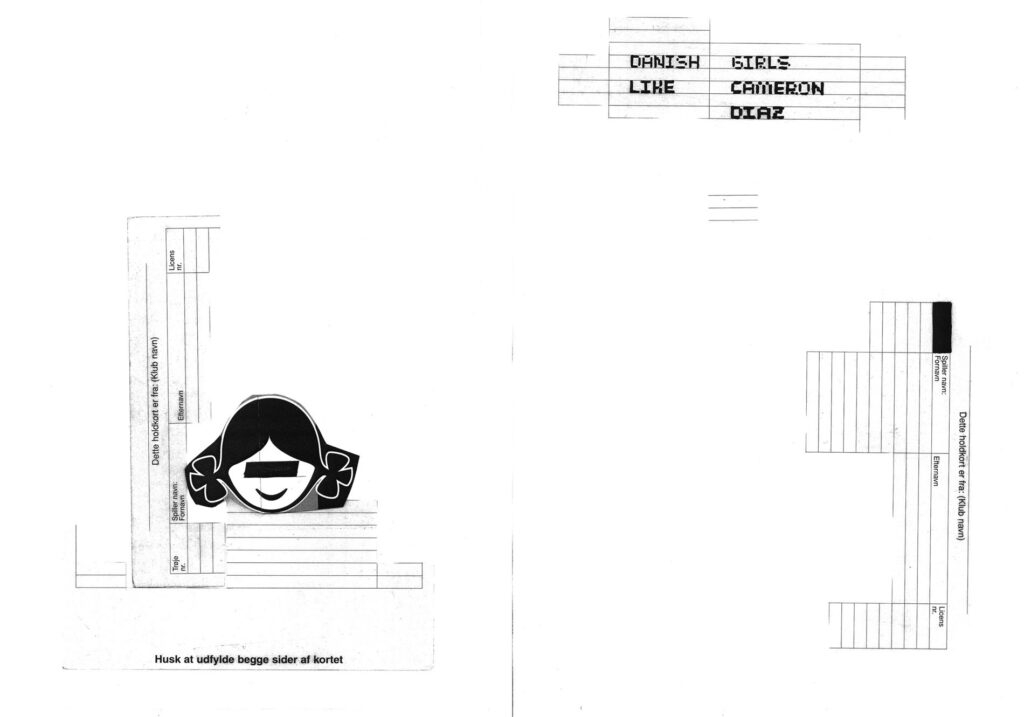
Like Cameron Diaz, two meters tall, Danish models eat their Smørrebrød with Salmon and Stonefish caviar. Sune Ehlers, Kasper Riisholt and I, we sit, well protected from the wet and cold of Copenhagen, in the Apogs studio. In contrast to the difficulty of getting here by train inside a ferry, merely equipped with semiautomatic doors, lacking any possibility of self-identification, «The One Weekend Book» is developing with great ease. Soon we reach the regular amount of pages, and approvals can only be made in its depth, which makes us all forget the circumstances under which we arrived.
Martin Lorenz: Sune, you participated in the third volume of «The One Weekend Book Series». Tell me about it. How was it?
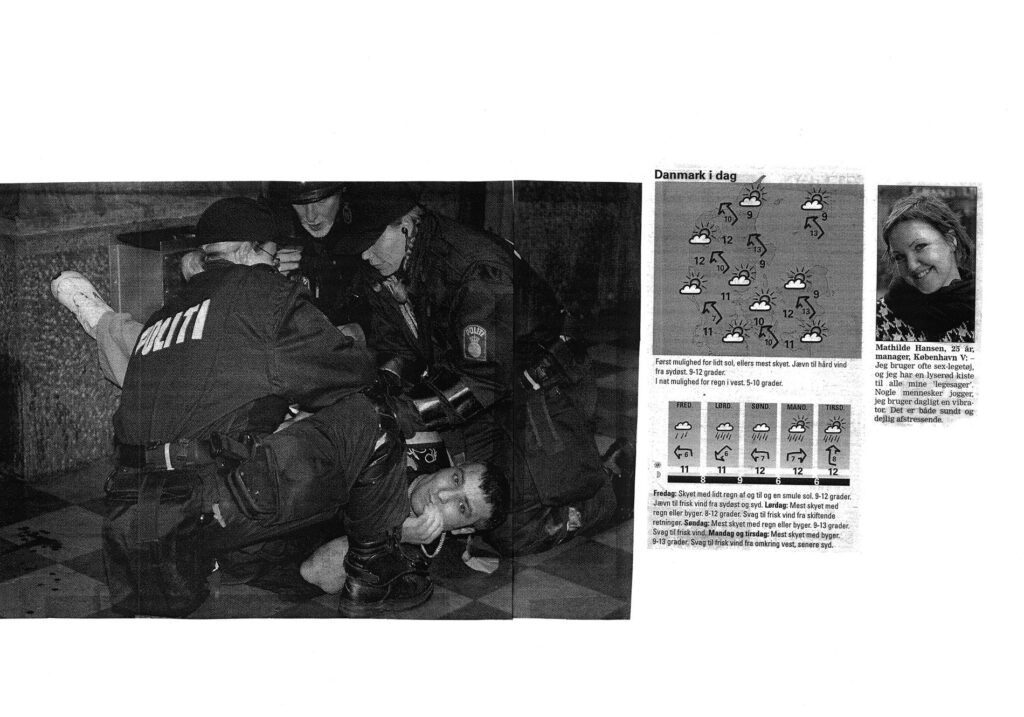
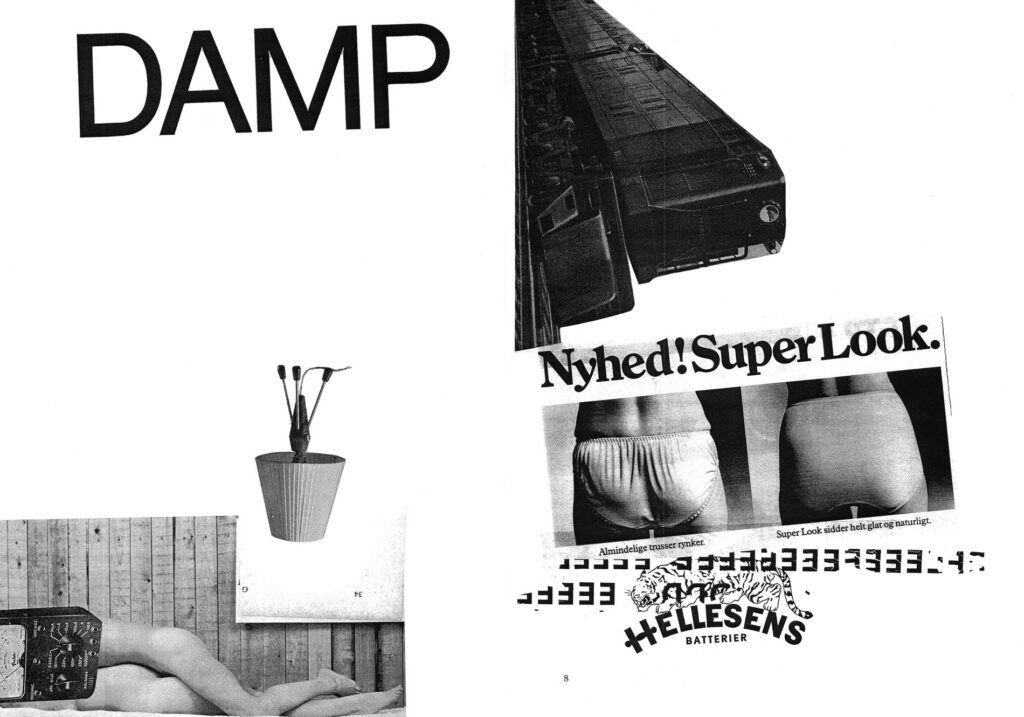
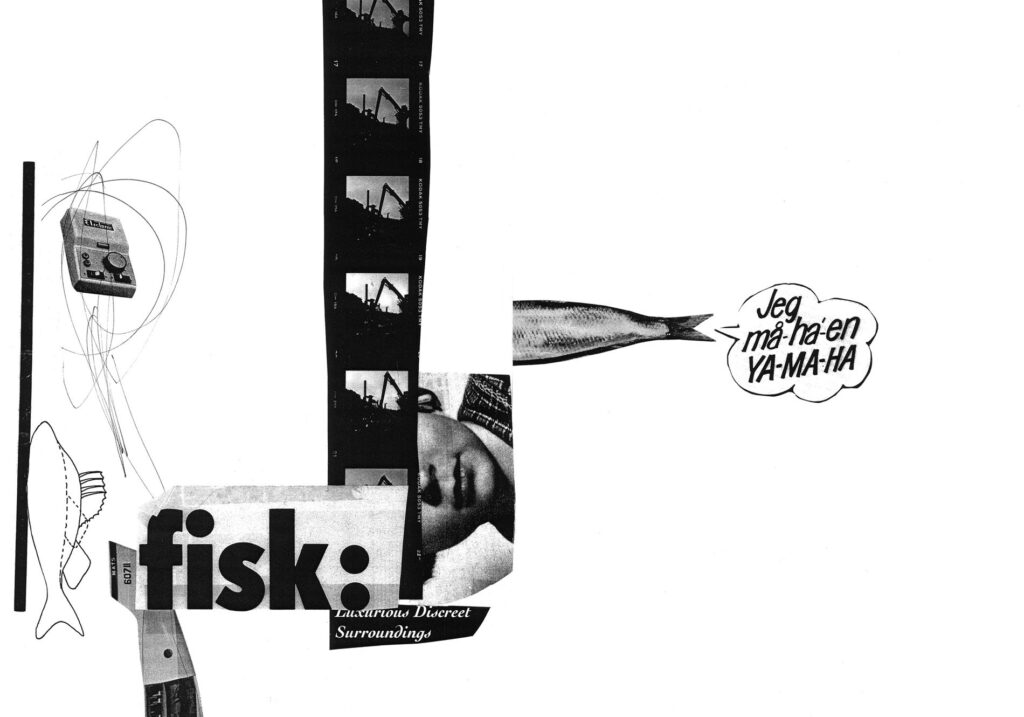
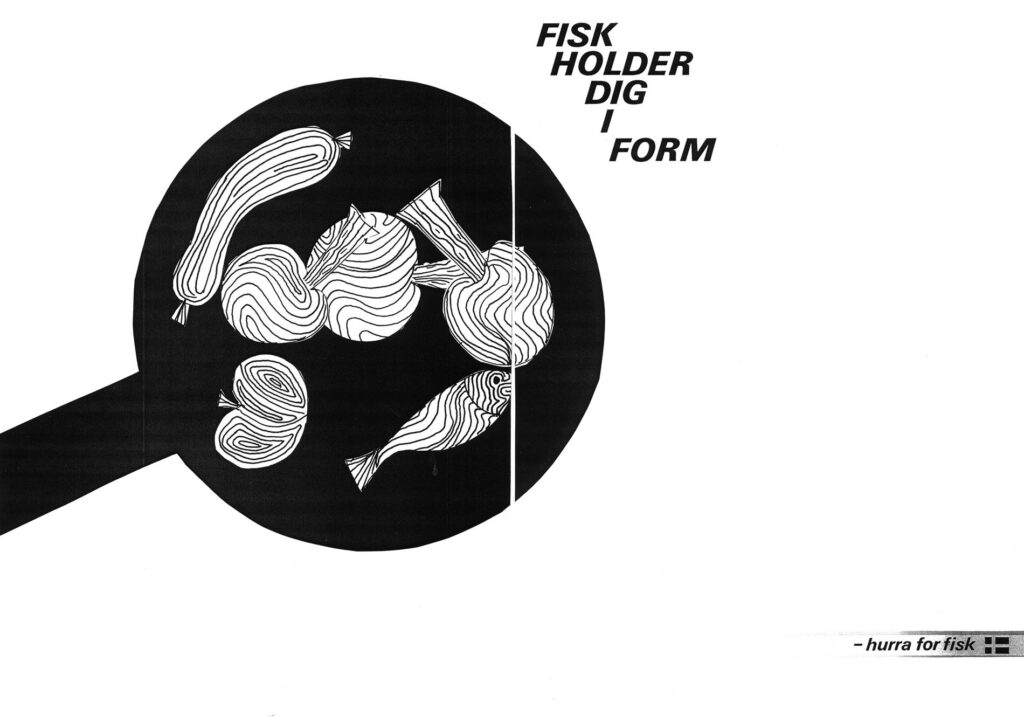
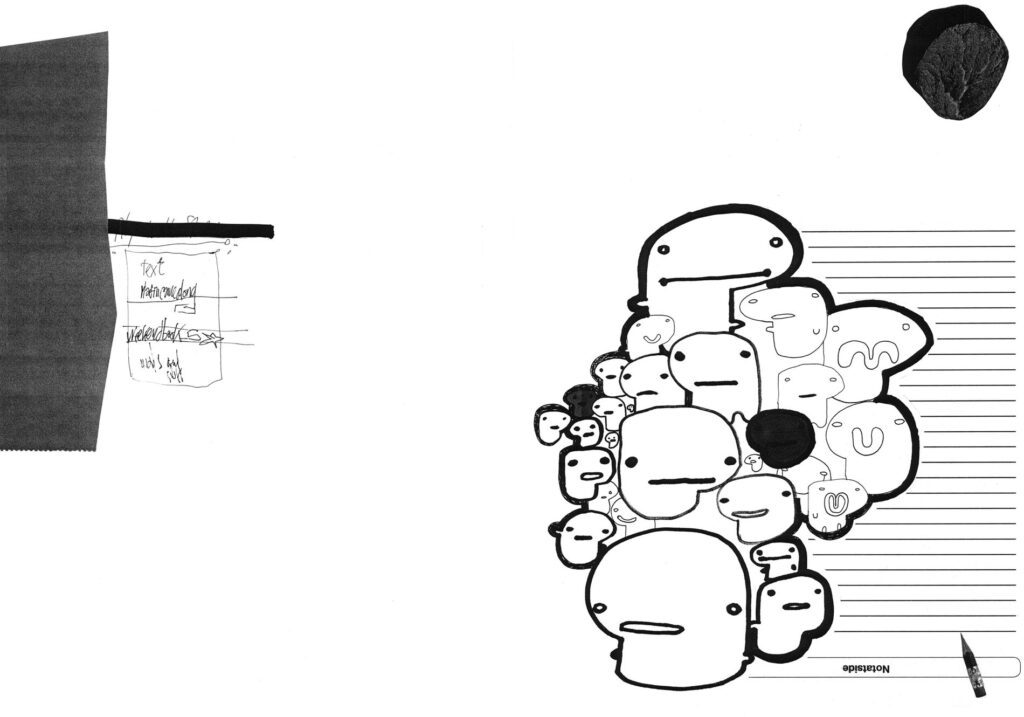
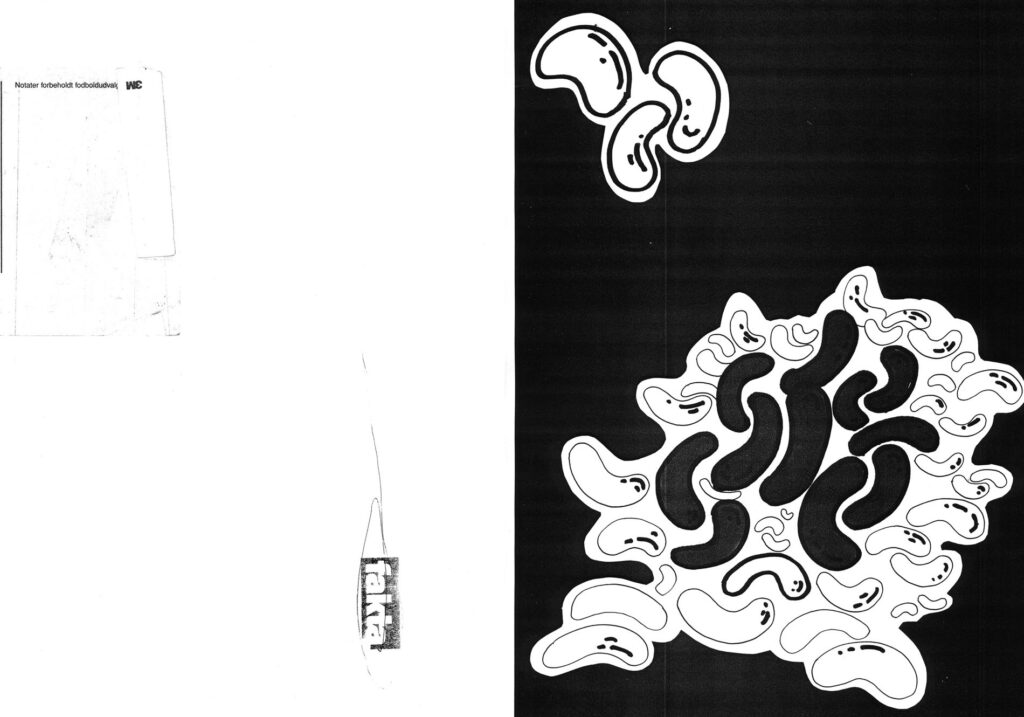
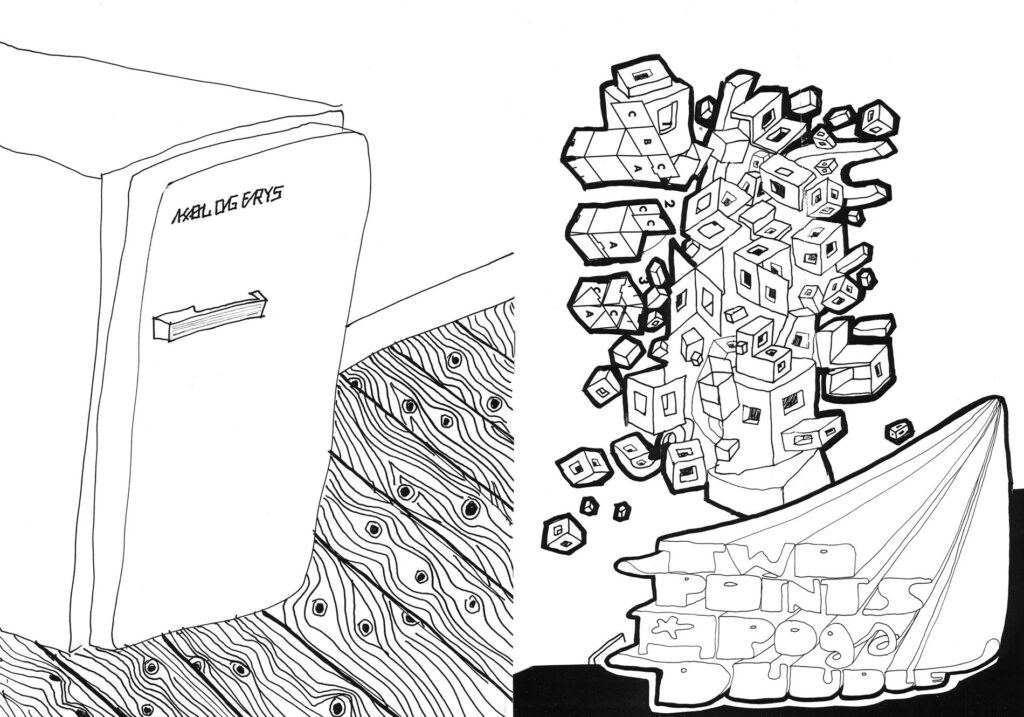
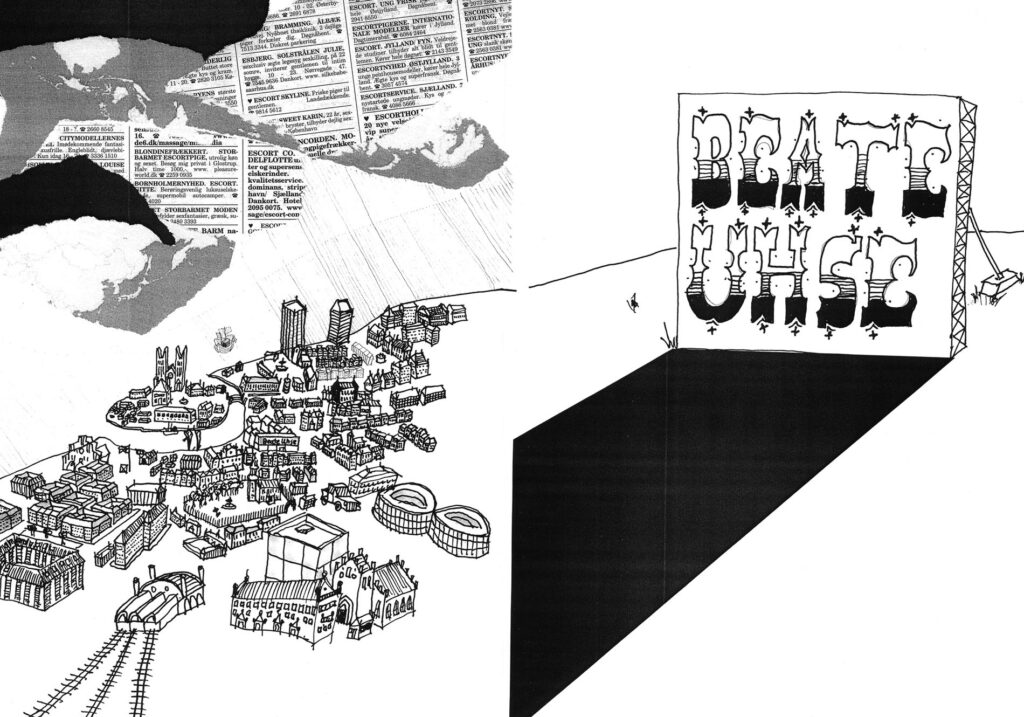
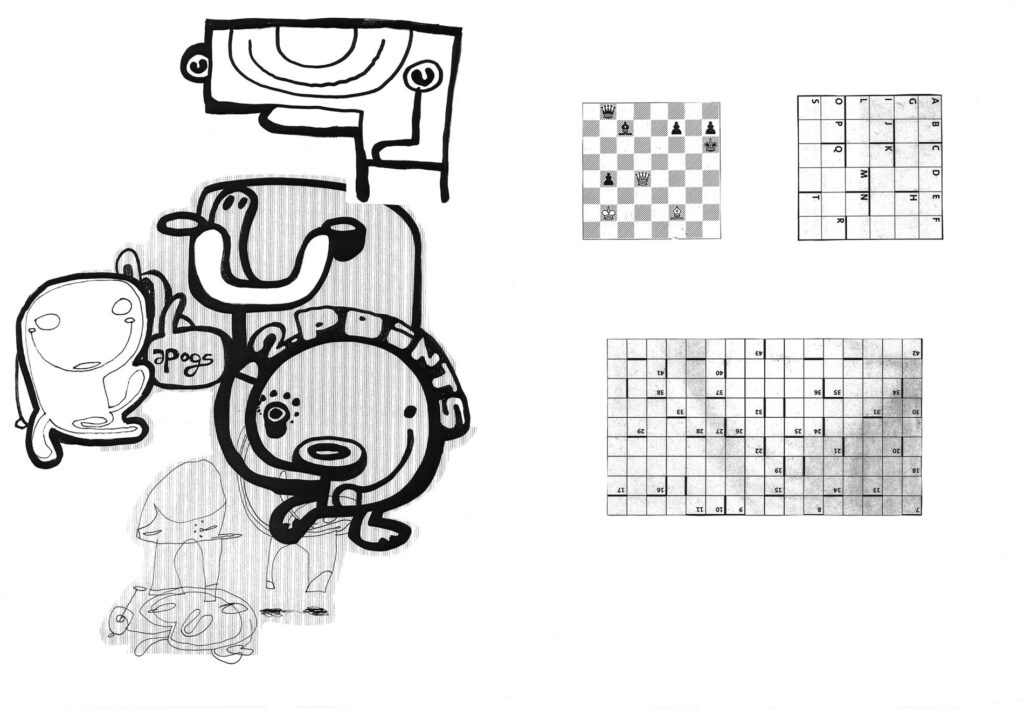
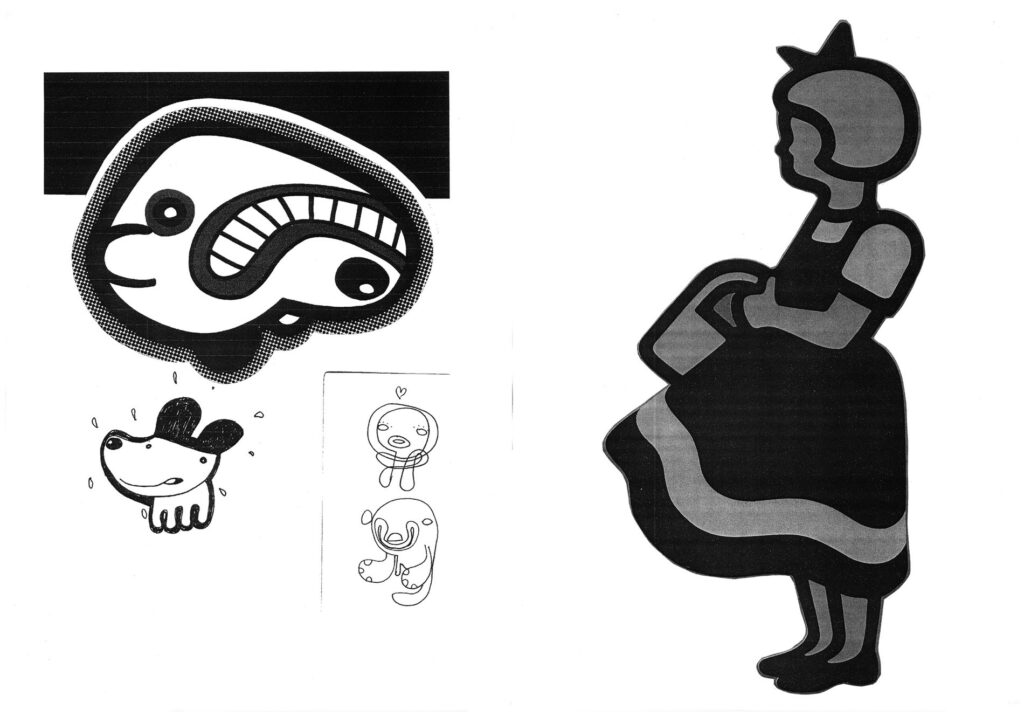
Sune Ehlers: It was a grand experience – I’ve heard a billion cliches in the past about communication through drawings and blah blah blah. But the fact about «The One Weekend Book Series» in this case anyway, is that it was exactly what I felt we did – communicated. I had never met my two teammates before – only talked via email. Our session was, for me at least, a visual conversation. Crouched over the pens and paper, we reacted to each other’s silly doodles, and a weird form of language took form and took over. It was a thrill.
M.L.: You made up a very interesting term, the «visual conversation». I think that’s a brilliant definition of what happened there. What do you think are the circumstances that are needed to make such a conversation happen?
S.E.: Focus on process and not result is evident for me. I have, besides all my other graphic work, a project going with sketchbooks in which I send 12 sketchbooks back and forth between me and 12 different people around the world. When I started the project, I focused a lot on getting the things «right». But I quickly realised that I should focus on the energy living in the drawings themselves. Not think too hard on where I was going but more on having a good time doing it. My drawings tend to be much more energetic and strong when I let my hand wander – when I set it all free – free myself of rules and fear. In doing this – and especially in connection with collaborations – the result is always completely surprising and something I learn a lot from. I think the primary difficulty in this is the disease too many artist have – the fear that someone else might steal their ideas, expressions, etc. The more you focus on this, the more boring the result. The visual conversation is a «talk» free of fear – an action-reaction-thing. And just as you don’t know what a person will answer you if you improvise verbally – you’ll get an equally surprising answer you’ll get visually if you draw loosely and focused on process. Don’t be afraid of others – they will only make you stronger. Focus on process – focus on having a good time whilst drawing [talking], and the results will come to you…
M.L.: That describes pretty well the atmosphere we were working in, but there was as well something else. A certain excitement and productive anxiety; we did not know each other that well, then there was this time pressure and we wanted to create something great. On the other hand, I could see that you were very confident; you seemed to have a lot of fun, which made me enjoy that weekend even more.
Let me come back once more to the terms you used, «communication» and «conversation». The words «communication» and «conversation» are mostly connected to the written or spoken word and stand very seldom in connection with visual media. You made up the term «visual conversation», which connects both. I don’t think that the visual language transports the same kind of informations like the spoken or written language does, but it is difficult to really define the difference. Words like emotional and rational don’t describe it well, as both visual and verbal media can be emotional or rational. I was wondering what your thoughts on «visual conversation“ were. Does the difference between verbal and visual expression also make a difference in the information that is going to be transferred or exchanged? … or how do you read the volumes of «The One Weekend Book Series»?
S.E.: I believe that drawn statements in general hold all the information a verbal statement holds – AND more. Somehow the restraint that what you have in your head and try to get out cannot be 100 per cent achieved gives away a lot from both the «sender» and the «receiver». What I mean to say is that very, very few people can translate the images they have in their heads to the exact same image on paper. Drawing is not an exact science – there’s no formula, so to speak. We try to get our images out and achieve it to more or less perfection – and it’s the lack of correctness – some might call it incorrectness – where the real communication takes place. It’s that «it» that a painting, a drawing, a doodle has. Something takes over, and you cannot control it – likewise, you find it difficult to explain verbally – it’s just right somehow. «The One Weekend Book Series» has an extra element attached to it – when three people’s «it» collide, you end up with something magical – unexplainable – something vibrant.
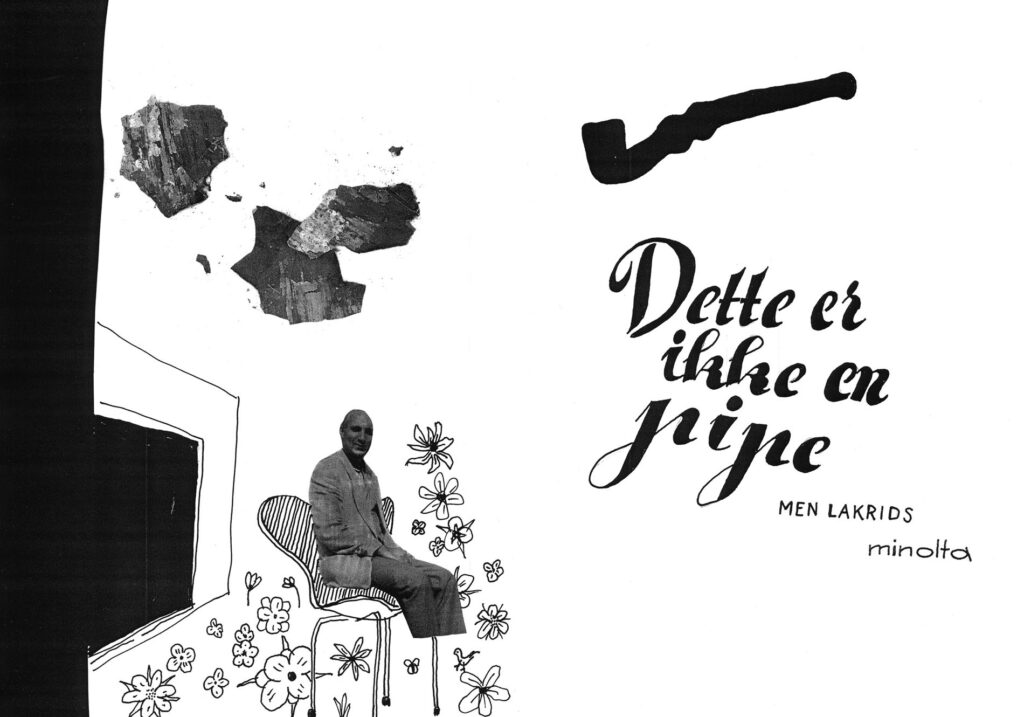
Martin, for me, something of the fascination in the process of «The One Weekend Book Series» is the part where I check out what my co-drivers are doing next to me – What went through your head as you saw me and Kasper glueing stuff all over the place; disbelief, scepticism, fear?
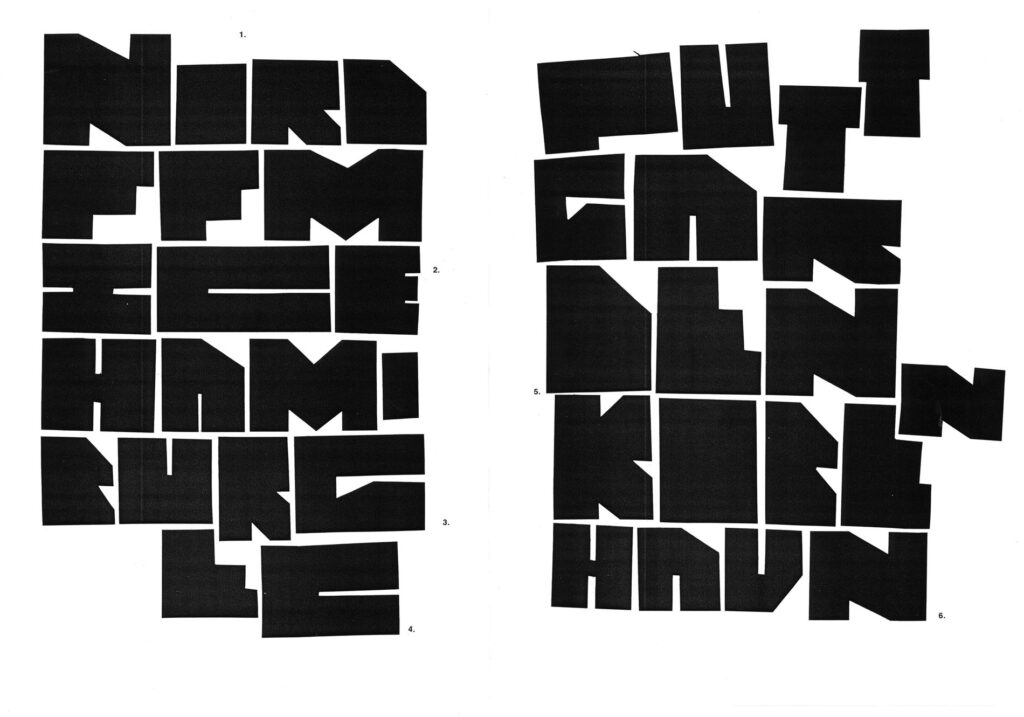
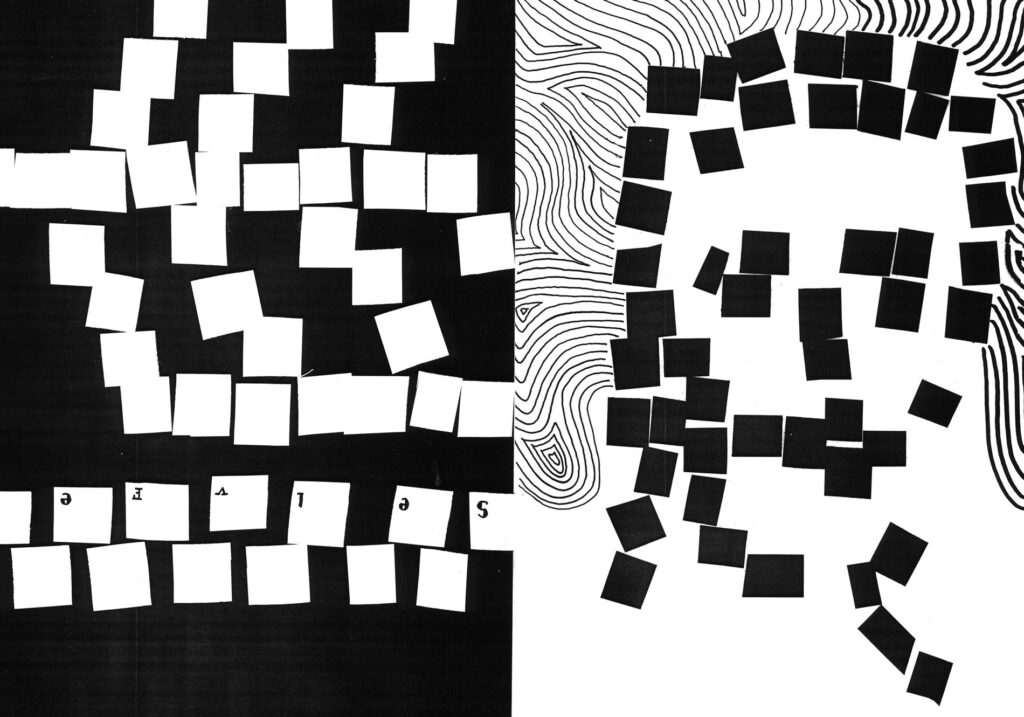
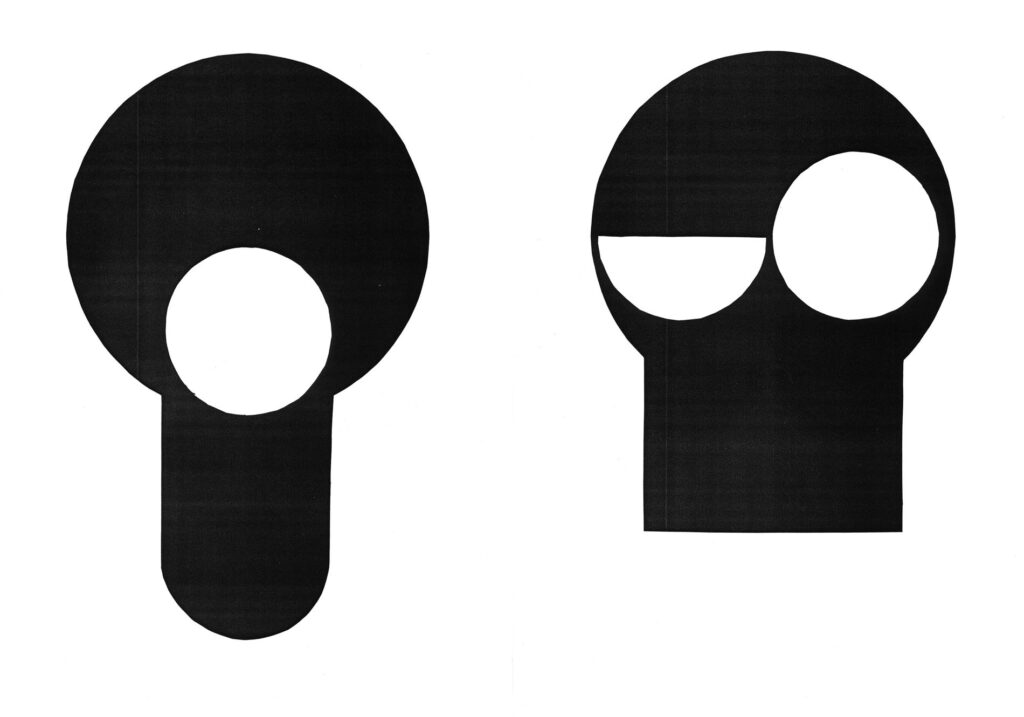
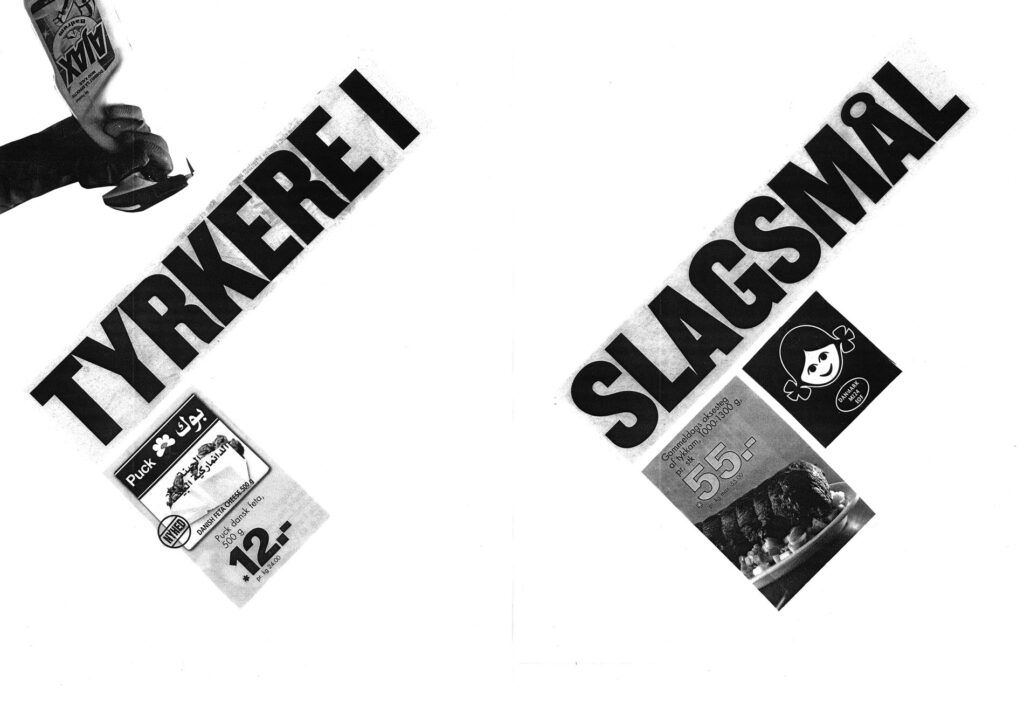
M.L.: Ha, Ha, yes, disbelief, but in the sense of positive surprise. We made very fast progress. It was one of the volumes that could have been done actually in only one day. We had to start very early to compile the illustrations to the series. I knew your duudle.dk work and was very surprised when you started making experiments. At the end, when I brought the pages into a final order, it was these pages that connected some series. They were acctually that what you called the three people «it» making something new, unexplainable. That’s always the most fascinating moment during the creation of «The One Weekend Book Series». It’s very exciting, because everybody left their familiar territory; they try something new. I never know in these moments if what we are creating is good or not, but I don’t care; it doesn’t seem important.